




Freeze Dryer and Dehydrator: What’s the Difference for Fruit & Veggie Snacks?
1) The core difference in one sentence
Dehydrating evaporates water with heat and airflow, which tends to shrink cells and concentrates sugars on the surface, making snacks denser and often chewier.
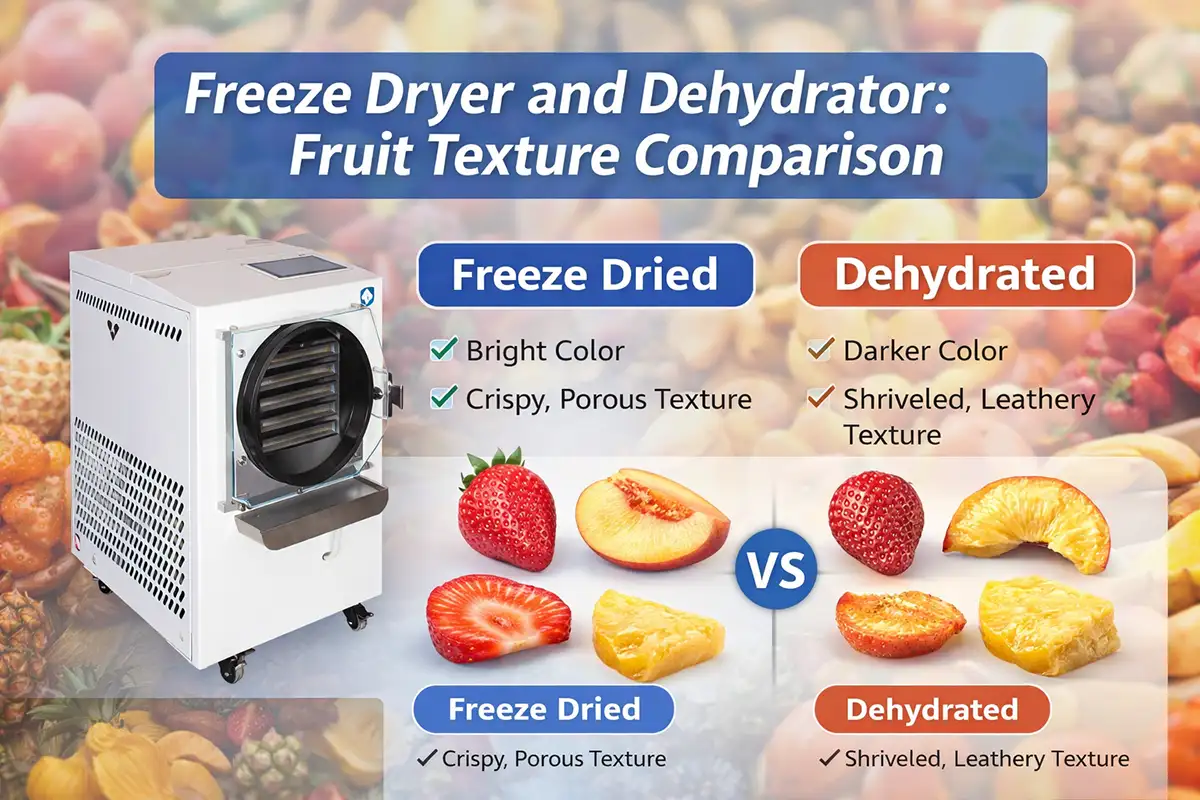
If both remove water, why does one become crunchy and the other becomes chewy?
The answer is the drying pathway. In a freeze dryer, water is first frozen and then pulled out as vapor under vacuum, so cell walls don’t collapse as much. The “empty spaces” left behind form a sponge-like network that snaps crisply when bitten. In a dehydrator, liquid water migrates out while the food is warm, and that migration plus heat usually causes shrinkage—less internal pore space, more toughness.
2) Freeze dryer vs dehydrator: what changes for fruit & vegetables
For most buyers, the decision isn’t about the name—it’s about what the finished mango, strawberry, okra, or apple actually feels and tastes like, and how long it lasts on a shelf.
Note: “Nutrition” is not one number. Vitamin C, polyphenols, color, aroma, and texture stability may move differently depending on process settings and packaging.
3) Nutrition and quality: what people usually mean (and what matters)
When asking “Which is healthier, a freeze dryer and dehydrator?” the real question is usually: Which method better preserves the fragile parts—color, aroma compounds, and heat-sensitive nutrients—while still making a stable snack.
Does freeze-dried fruit automatically have “more nutrition” than dehydrated fruit?
Not automatically. The honest answer is: it depends on which nutrient and how dehydration is done. However, because freeze drying generally avoids long exposure to warm air, it frequently shows an advantage for heat-sensitive compounds (such as certain vitamins and aromatic volatiles). For snacks where “fresh strawberry flavor” is the selling point, that difference becomes noticeable even before reading a label.
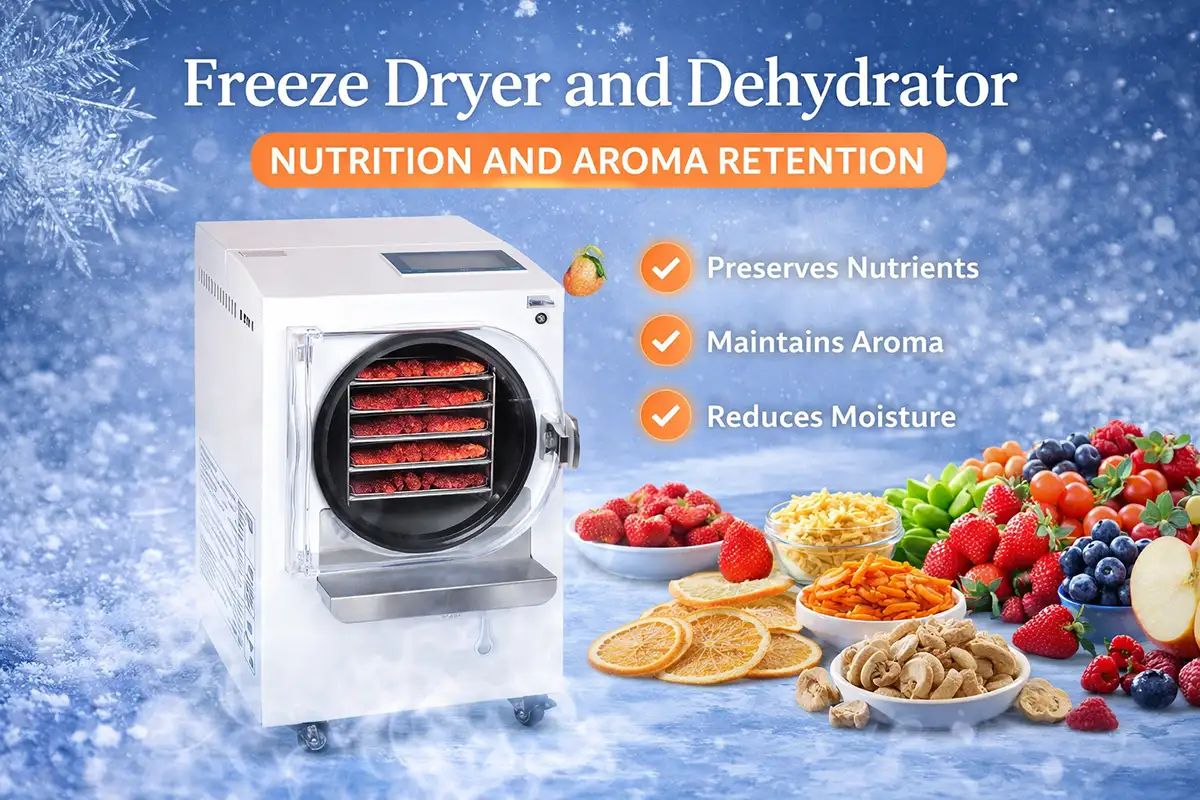
Another practical angle: freeze-dried pieces rehydrate faster (in milk, yogurt, soups, or just in the mouth). That’s not only “fun crunch”—it’s also why freeze-dried ingredients are preferred in many instant foods.
4) Cost: why freeze dryers cost more (and when that cost pays back)
Dehydrators look cheaper because they are simpler machines. Freeze dryers are more expensive because they must combine: deep refrigeration, a vacuum system, a cold trap for ice capture, and controlled heating for sublimation.
If a dehydrator is cheaper, why do premium snack brands still choose freeze drying?
Because the product sells differently. Freeze-dried fruit can be positioned as crispy, light, “fresh-like,” and premium. It also reduces complaints like “sticky,” “tough,” or “went soft in the bag,” when packaging is done correctly. In many markets, that higher perceived quality supports a higher price per gram, which can offset the higher equipment investment.
For deeper reading on cost and buyer concerns, these internal resources may help:
5) A simple decision guide (fruit & vegetable snacks)
Choose a freeze dryer if the goal is:
- Crunchy “puffed” fruit (strawberries, mango, apple, banana) with premium mouthfeel.
- Better retention of aroma/color for high-value produce ingredients.
- Long shelf life with proper packaging (high barrier bag/jar + oxygen absorber).
- Products intended to rehydrate quickly (yogurt toppings, instant meals).
Choose a dehydrator if the goal is:
- Lower upfront budget and simpler operation.
- Chewy dried fruit or fruit leather where shrinkage is acceptable.
- Shorter shelf life is okay (fast turnover, local sales, home snacks).
Interested in upgrading from “dried” to “freeze-dried” quality?
For fruit and vegetable products where crispness, aroma, and premium positioning matter, a freeze dryer is usually the more competitive tool—especially when scaling beyond hobby batches.
Tip for consistent results: slice thickness, pre-freezing, and packaging (oxygen + moisture barrier) often matter as much as the machine choice.