Chemical manufacturing · Solvent recycling
Best solvent recovery solutions for chemical manufacturers?
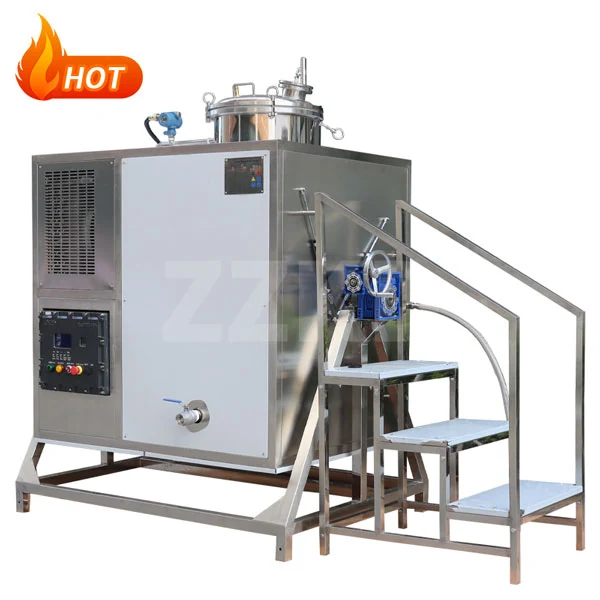
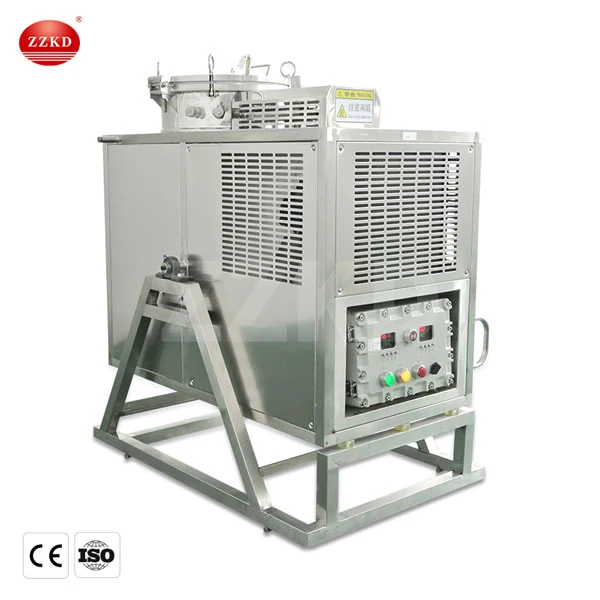
The best solvent recovery solutions for chemical manufacturers start with the waste stream, not simply the largest machine. A suitable Solvent Recovery Machine should match the solvent composition, working batch, available utilities and quality requirements of the intended reuse process.
What a Solvent Recovery Machine can bring to production
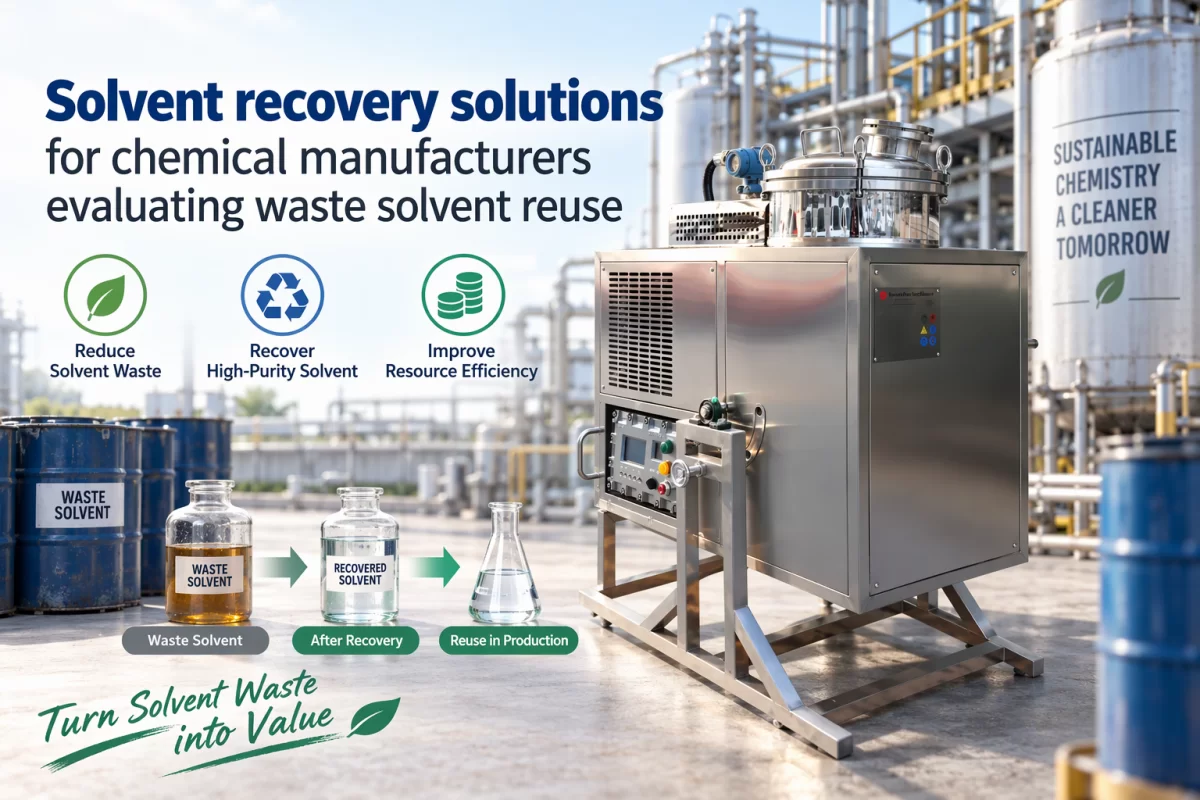
Chemical manufacturing can generate solvent-containing waste during equipment cleaning, material processing and product changeovers. Solvent recovery offers a way to separate reusable solvent from suitable contaminated liquids rather than treating the entire stream as a disposal-only material. The purchasing objective is a dependable fit between the recovery equipment and the plant’s actual operating routine.
The available product range includes listings for waste organic solvents, ethyl acetate, xylene, toluene, mixed chemical solvents and hydrocarbon cleaning liquids. Application-specific listings also cover printing, electronics cleaning, cosmetics and extraction-related solvent reuse. These are useful starting points for a project discussion, but they should not be interpreted as universal compatibility for every mixture or every model.
For a direct starting point, explore the Solvent Recovery Machine product page and prepare a description of the material to be processed.
What determines the best solvent recovery solution for a chemical plant?
I recommend starting with material characterization and the production schedule. A machine that fits the waste stream, batch volume and installation conditions is more useful than one selected only for a high capacity figure. Reuse quality and safe operation should be part of that decision from the beginning.
How solvent distillation and recovery work
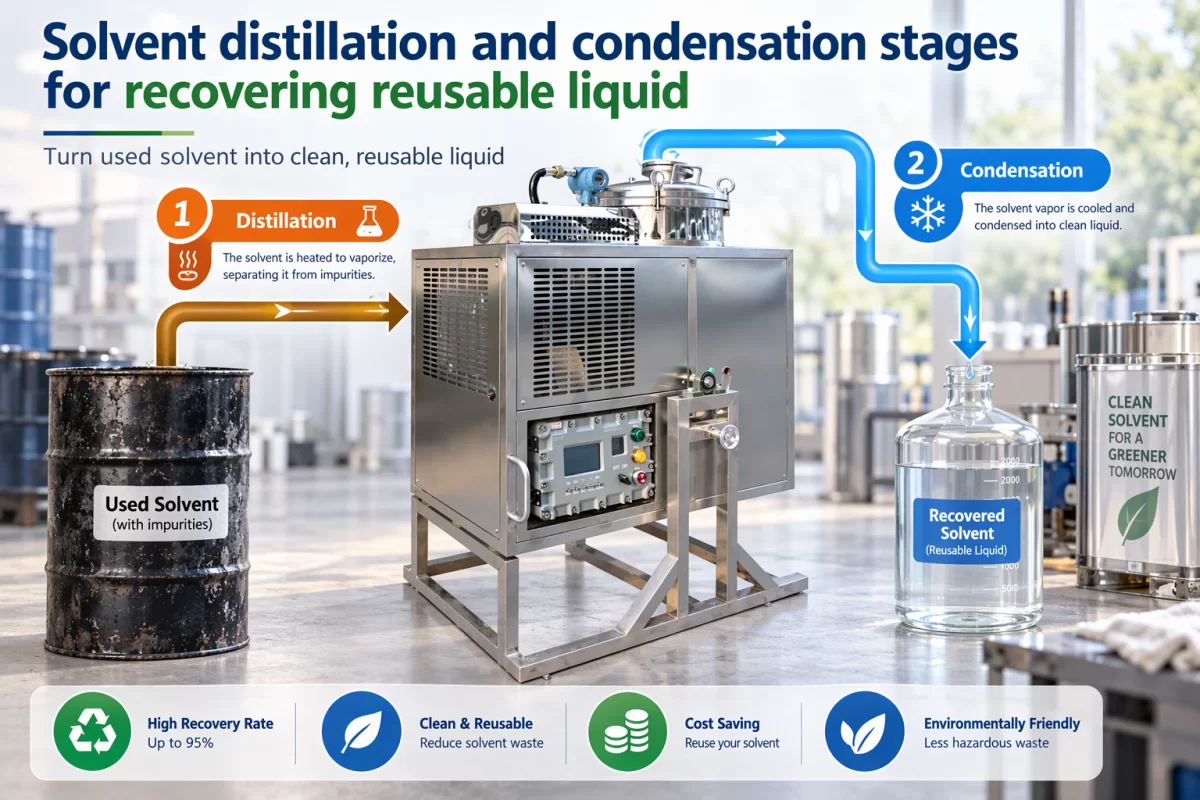
Distillation-based solvent recovery uses evaporation followed by condensation. The contaminated feed is heated so that recoverable volatile components enter the vapor phase. Cooling then converts that vapor back into liquid for collection. Less volatile contaminants can remain in the distillation residue, which still needs appropriate handling and disposal.
This separation principle is relevant to the solvent distillation and recovery units in the product range. It does not mean that every mixed solvent stream can be separated into individual pure chemicals. Components with similar boiling behavior, water content and volatile contaminants can affect the composition of the recovered liquid. Thermal stability also matters when deciding whether a waste stream is suitable for heated recovery.
Recovered solvent should therefore be assessed against the requirements of its next use. A cleaning operation and a quality-sensitive manufacturing step may require different acceptance tests. For additional process context, read the guide to industrial solvent recovery systems and distillation.
Model-specific parameters for solvent recovery selection
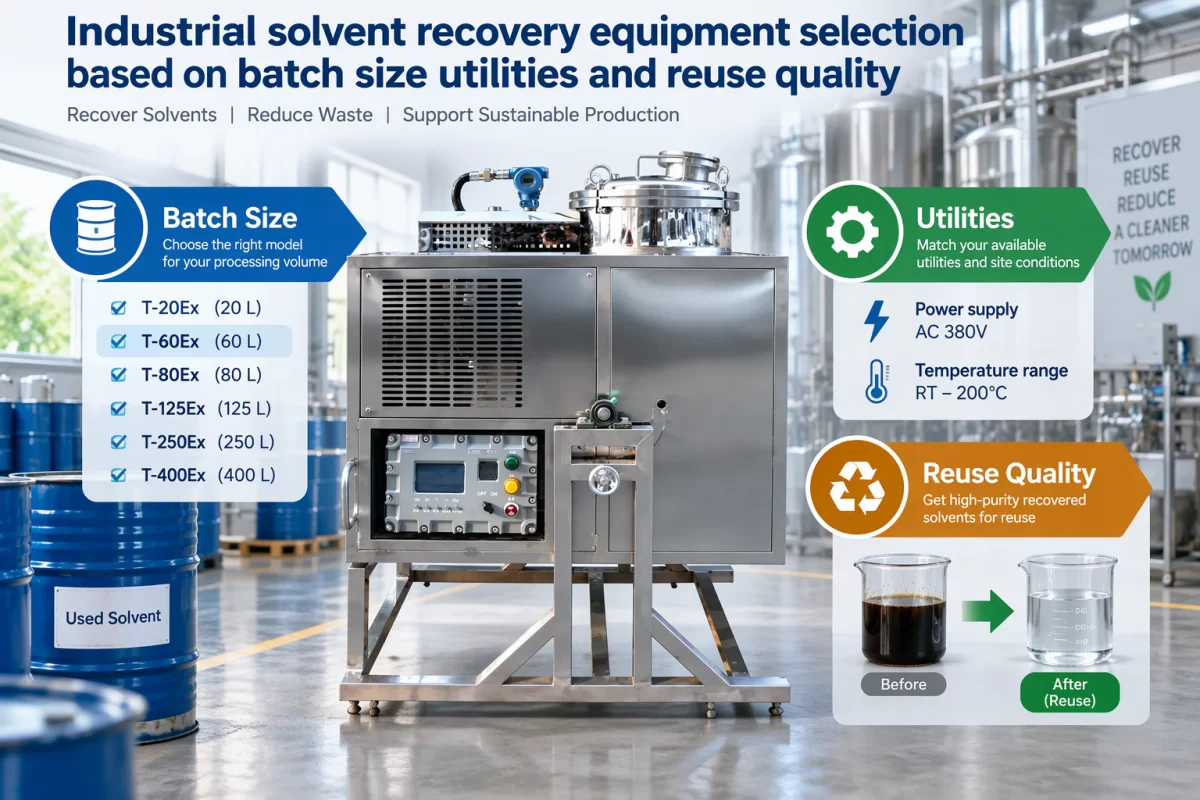
The T-series model specifications provide a practical basis for comparing feed capacity, heating power, treatment time and installation requirements. Keep each model’s figures together: the larger feed capacity of one machine should not be paired with the shorter treatment time or smaller footprint of another.
| Model | Feed capacity (L) | AC supply (V) | Heating power (kW) | Temperature range (°C) | Treatment time (min) | Recovery (%) | Weight (kg) | Machine size (mm) |
|---|---|---|---|---|---|---|---|---|
| T-20Ex | 20 | 380 | 2 | RT–200 | 120 | 95 | 153 | 860 × 760 × 1190 |
| T-60Ex | 60 | 380 | 4 | RT–200 | 150 | 95 | 170 | 1160 × 870 × 1260 |
| T-80Ex | 80 | 380 | 5 | RT–200 | 180 | 95 | 200 | 1180 × 850 × 1290 |
| T-125Ex | 125 | 380 | 6 | RT–200 | 210 | 95 | 280 | 1250 × 920 × 1450 |
| T-250Ex | 250 | 380 | 16 | RT–200 | 240 | 95 | 520 | 2600 × 1200 × 1950 |
| T-400Ex | 400 | 380 | 32 | RT–200 | 270 | 95 | 1200 | 1990 × 1850 × 2090 |
RT means room temperature. Feed capacity is not an hourly throughput rating, and heating power is not a measurement of total energy consumed per batch. The listed recovery percentage describes recovery, not recovered-solvent purity.
For example, the T-60Ex lists a 60 L feed capacity with 4 kW heating power and a 150-minute treatment time. The T-250Ex lists 250 L, 16 kW and 240 minutes. These combinations help narrow the equipment shortlist, while daily production planning should also allow time for loading, cooling, unloading, residue removal and routine cleaning.
Does a listed 95% recovery rate mean 95% solvent purity?
I treat recovery and purity as separate measures. Recovery concerns the amount recovered; purity concerns the composition of that liquid. Before returning recovered solvent to production, I recommend defining acceptance criteria and testing a representative recovered sample for the intended application.
Choosing solvent recovery equipment for chemical manufacturing
A useful selection process connects the machine specifications to everyday production conditions. Consider the following factors before committing to a model:
- Feed composition: Identify the solvent or solvent blend, water content, solids, oils, resins and other contaminants. Include information about substances that may react or degrade during heating.
- Working batch and schedule: Describe typical and peak waste volumes, collection frequency and the time available for recovery. Select capacity around the actual working batch rather than storage-tank volume alone.
- Utilities and installation: The listed models use a 380 V AC supply. Review electrical infrastructure, cooling arrangements, ventilation, access and space for maintenance alongside machine dimensions and weight.
- Safety requirements: Establish the site’s hazardous-area requirements and required equipment documentation. A model suffix alone should not replace an assessment of the safety configuration needed for the installation.
- Recovered-solvent destination: Define whether the liquid will return to cleaning, formulation or another process, then set suitable quality-control checks and storage procedures.
- Residue and maintenance: Plan how concentrated residue will be removed, stored and managed, and how the machine will be cleaned between different materials.
For coating-related production and solvent-based cleaning, the practical guide to solvent recycling for manufacturing provides further context for integrating recovery into a waste-management workflow.
Reference pricing and purchasing value
The value of a Solvent Recovery Machine depends on how much recovered solvent can genuinely replace purchased solvent and how the equipment changes waste-handling costs. A sound evaluation includes electricity, cooling, operator time, cleaning, maintenance, testing and residue disposal. Equipment price alone cannot establish a reliable payback period.
Our company’s reference price
US$2,645–9,690
This is a company reference price range, not a model-specific quotation. The actual quotation depends on the selected configuration and the inquiry results.
What information supports a useful equipment quotation?
I recommend providing the material composition, typical working batch, daily processing requirement, target operating conditions and intended solvent reuse. Installation details and configuration requirements help build a proposal that addresses the process rather than just naming a machine.
A practical route to the best solvent recovery solution
The best solvent recovery solutions for chemical manufacturers are those that combine a suitable separation process with realistic batch planning, safe installation and verified reuse quality. The T-series offers model-specific feed capacities from 20 L to 400 L, allowing buyers to compare equipment sizes without relying on a single broad performance claim.
Start with the waste solvent and its intended destination, then compare capacity, heating requirements, treatment time and installation needs. Submit the material details, working batch, target conditions and desired configuration to request a corresponding Solvent Recovery Machine proposal and quotation.