Drying Oven · Pharmaceutical laboratory guide
Laboratory vacuum drying oven with pump for pharmaceuticals
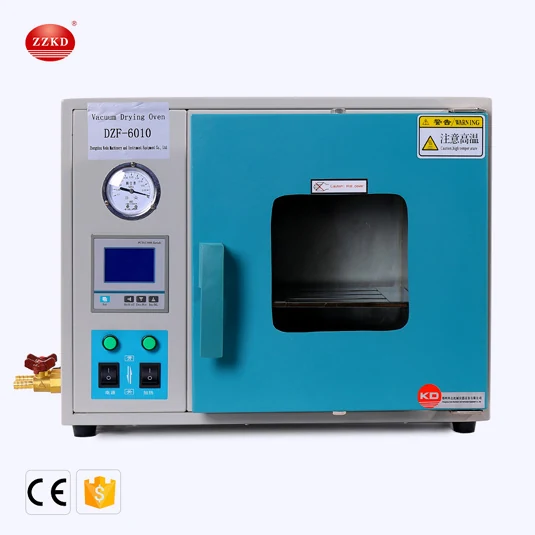
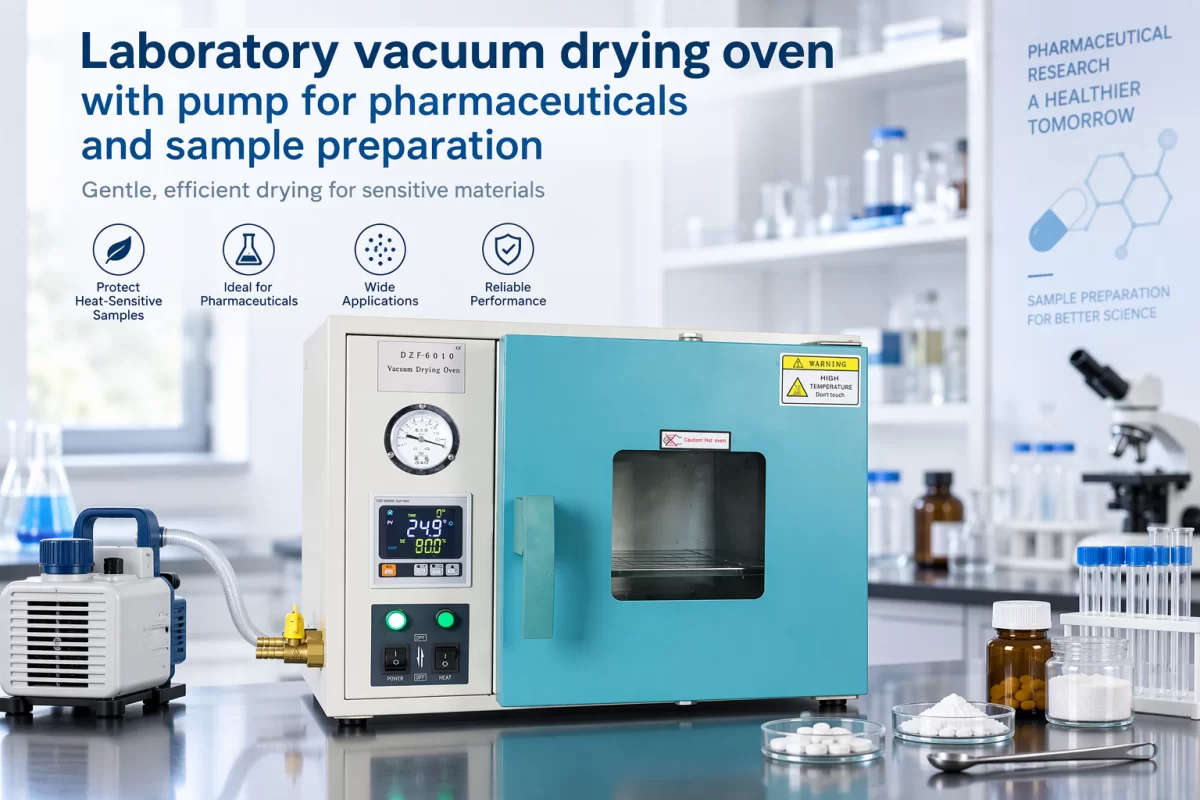
Selecting a laboratory vacuum drying oven with pump for pharmaceuticals starts with the material, not simply the chamber size. The drying temperature, moisture or solvent load, sample arrangement, and pump compatibility all influence whether a system fits the intended laboratory process. The DZF Drying Oven range offers several chamber sizes for evaluating batch drying requirements.
How pharmaceutical vacuum drying works
A vacuum drying oven combines heating with reduced pressure. The oven supplies the heat needed for evaporation, while a connected vacuum pump removes gas and vapor from the chamber. Lower pressure can allow moisture or solvents to evaporate at lower temperatures than under atmospheric conditions. This makes vacuum drying worth evaluating when the material has a limited thermal tolerance.
The final drying result still depends on the sample. A thick powder bed, a wet filter cake, and a shallow tray of granules will not necessarily behave alike. Heat transfer, vapor release, and the chosen endpoint must therefore be considered together. Vacuum drying is not, by itself, a guarantee of complete solvent removal or preservation of every active ingredient.
For a broader process comparison, read the guide to vacuum drying versus air drying. It is a useful starting point when deciding whether reduced-pressure drying belongs in a laboratory workflow.
DZF Drying Oven model specifications
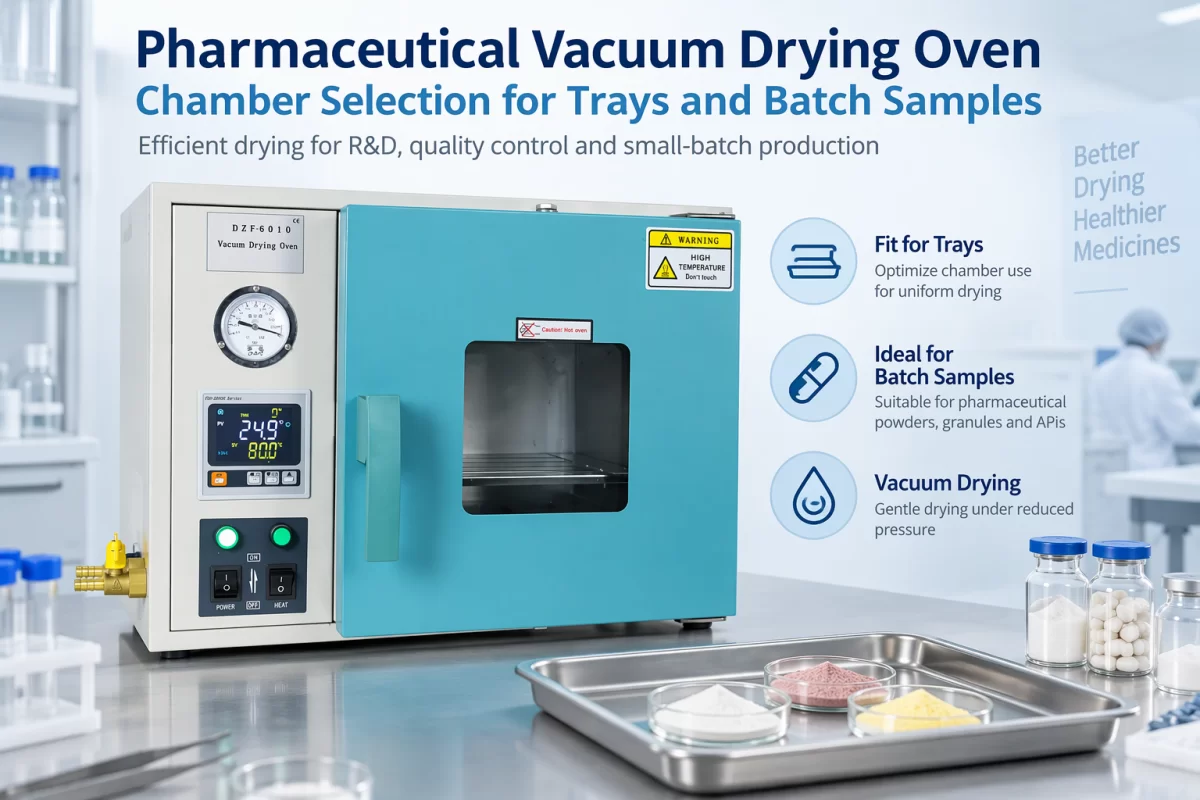
The following models provide distinct chamber sizes and loading arrangements. Chamber volume is a starting point for selection, but usable batch size also depends on tray dimensions, sample depth, and spacing. The inner dimensions below are listed in width × depth × height order.
| Model | Chamber capacity (L) | Input power (W) | Inner W × D × H (mm) | Shelves (pcs) |
|---|---|---|---|---|
| DZF-6010 | 8 | 400 | 200 × 200 × 200 | 1 |
| DZF-6020 | 25 | 700 | 300 × 300 × 270 | 1 |
| DZF-6050 | 55 | 1400 | 400 × 400 × 345 | 2 |
| DZF-6090 | 90 | 2000 | 450 × 450 × 450 | 2 |
For these four models, the chamber liner is 304 stainless steel, and the shell is specified as spray-painted with an anti-corrosion finish. Listed temperature stability is ±1.0 °C, and the timing range is 1–9999 minutes. Temperature stability should not be interpreted as a specification for temperature uniformity throughout a loaded chamber.
Input power is an equipment rating, not a prediction of energy consumption per batch or drying speed. Comparing models therefore requires more than choosing the highest wattage. A chamber that accommodates the intended trays and sample layer may be more useful than a larger unit that is poorly matched to the routine load.
Suitable pharmaceutical laboratory applications
Potential applications include drying research samples, evaluating moisture removal from powders or granules, and investigating drying conditions for isolated solids after filtration. These are process-development opportunities rather than assurances that every pharmaceutical material is suitable for an oven-based method.
For heat-sensitive samples, define the acceptable product temperature before developing the cycle. For solvent-bearing samples, assess vapor hazards and compatibility before selecting the pump and exhaust arrangement. If the intended process requires sterile handling, containment, or a validated manufacturing workflow, those requirements need to be addressed separately from basic oven selection.
A practical trial should record the sample mass, loading pattern, temperature setting, pressure conditions, and drying time. Residual moisture or solvent should be assessed with a method appropriate to the material. These records help distinguish an apparently dry sample from one that actually meets the required endpoint.
Choosing the pump for a laboratory vacuum drying oven
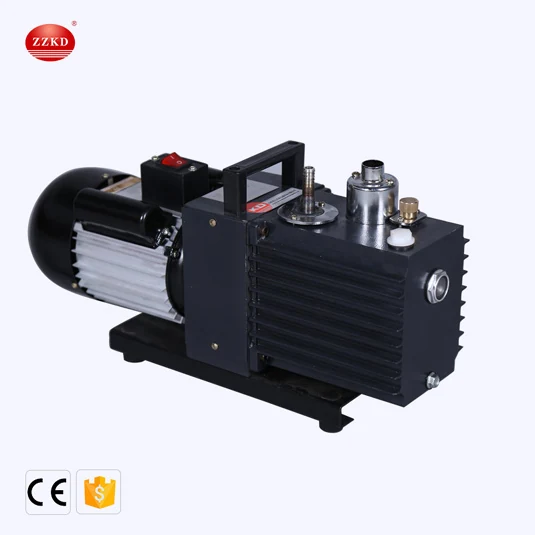
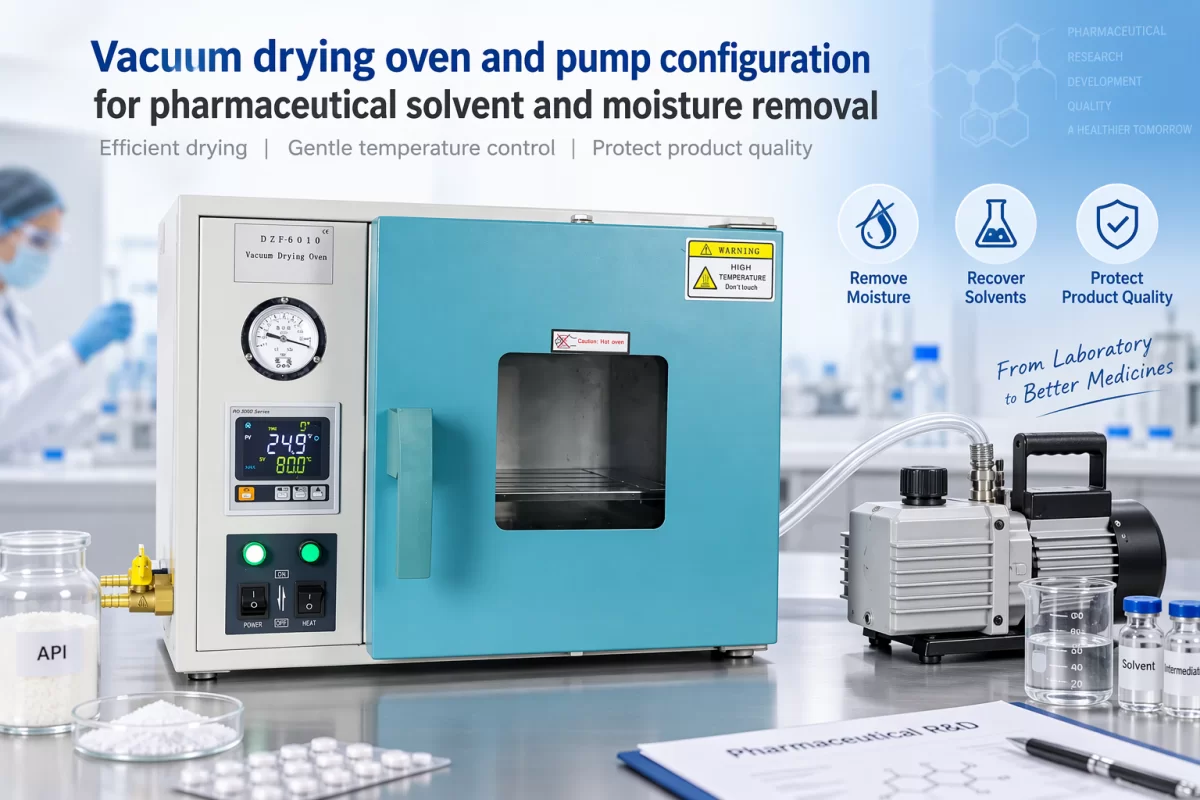
The vacuum pump is an important part of the system. Our product listings include small laboratory vacuum drying ovens with a vacuum pump and a separate double-stage oil rotary vane pump for vacuum drying oven applications. Pump selection should nevertheless follow the expected vapor composition and operating conditions, not the listing name alone.
Consider the required operating pressure, vapor load, chemical compatibility, connection arrangement, and exhaust handling. Depending on the application, vapor collection or pump protection may also be necessary. A separate pump listing does not establish that the same pump is included with every DZF oven package.
The guide to laboratory vacuum pump selection and operating considerations provides useful background for planning the oven-and-pump combination.
Selection priorities before ordering
- Define the material: Identify whether the load is a powder, granule, filter cake, or another sample form, and describe the moisture or solvent to be removed.
- Specify the working batch: Provide the normal sample mass, tray dimensions, and intended layer depth. Nominal chamber volume does not directly equal usable product capacity.
- Set the process conditions: Establish the acceptable product temperature, desired pressure conditions, and endpoint criteria before choosing the configuration.
- Plan the installation: Allow space for the oven, pump, connections, maintenance access, and any vapor-handling equipment required by the process.
- Define the purchase scope: State whether the request is for the oven alone or a package with a matched pump and application-specific accessories.
For additional guidance on material suitability, consult selecting vacuum drying ovens for heat-sensitive materials.
Reference price and purchasing value
Our company’s reference price
US$610
This is a reference price across our supplied listings, not a quotation for a specific DZF model or a complete pharmaceutical oven-and-pump package. The actual quotation depends on the selected configuration and inquiry results.
The purchasing value lies in matching the equipment to a repeatable laboratory task. Appropriate chamber dimensions, a suitable shelf arrangement, and a compatible pump can make a system more practical for routine sample preparation and drying trials. A lower initial price is not necessarily a better choice if the package does not fit the load or vapor-handling requirements.
Build the right pharmaceutical vacuum drying setup
A laboratory vacuum drying oven with pump for pharmaceuticals should be selected as a complete process setup. The DZF models presented here offer different chamber capacities, stainless steel liners, and shelf arrangements for laboratory batch work. Combine those specifications with material-specific drying trials and careful pump selection to make an informed purchasing decision.
Prepare the sample details, working batch, target conditions, and configuration requirements when requesting a proposal from ZZKD Instrument. A clearly defined inquiry helps connect the Drying Oven selection to the laboratory’s actual drying objectives and budget.