




Spray drying is one of the most efficient and widely used methods for transforming liquid materials into dry powders. It plays a crucial role in industries ranging from food production to pharmaceuticals and chemicals. But what exactly is the spray drying process, and why is it so effective?
Understanding the Basic Principle
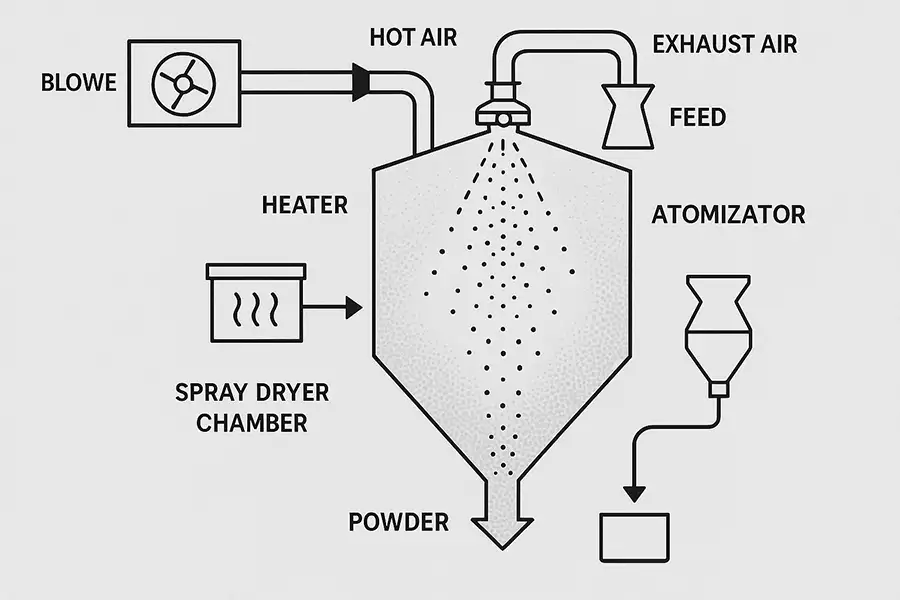
At its core, spray drying involves atomizing a liquid feed into a hot drying chamber. The liquid—usually a solution, slurry, or suspension—is converted into tiny droplets using an atomizer. These droplets are then exposed to a stream of hot air, which evaporates the moisture almost instantly. The result is a fine, uniform powder collected at the bottom of the chamber.
According to research by the University of Cambridge, spray drying can reduce moisture content to less than 5% in under 10 seconds, making it one of the fastest drying technologies available.
Step-by-Step Breakdown of the Process
- Preparation of Feed: The liquid feed is prepared by dissolving or suspending the material in a suitable solvent.
- Atomization: The feed is sprayed into a chamber through a nozzle or rotary atomizer, creating fine droplets.
- Drying: Hot air (typically between 150°C to 300°C) rapidly removes moisture from the droplets.
- Separation: The dried particles are separated from the air using cyclones or filters.
- Collection: The final powder is collected and packaged for use.
Applications Across Industries
Spray drying is used in diverse industries:
- Food industry: Production of milk powder, coffee, flavorings, and protein supplements.
- Pharmaceuticals: Creating stable formulations of drugs and probiotics.
- Chemicals: Drying of catalysts, polymers, and detergents.
For instance, in milk powder production, spray dryers ensure uniform particle size and instant solubility. You can learn more about this in our detailed guide Guide to Milk Powder Spray Dryers.
Advantages of Spray Drying
Some of the main advantages include:
- Rapid drying and high throughput.
- Excellent control over particle size and moisture content.
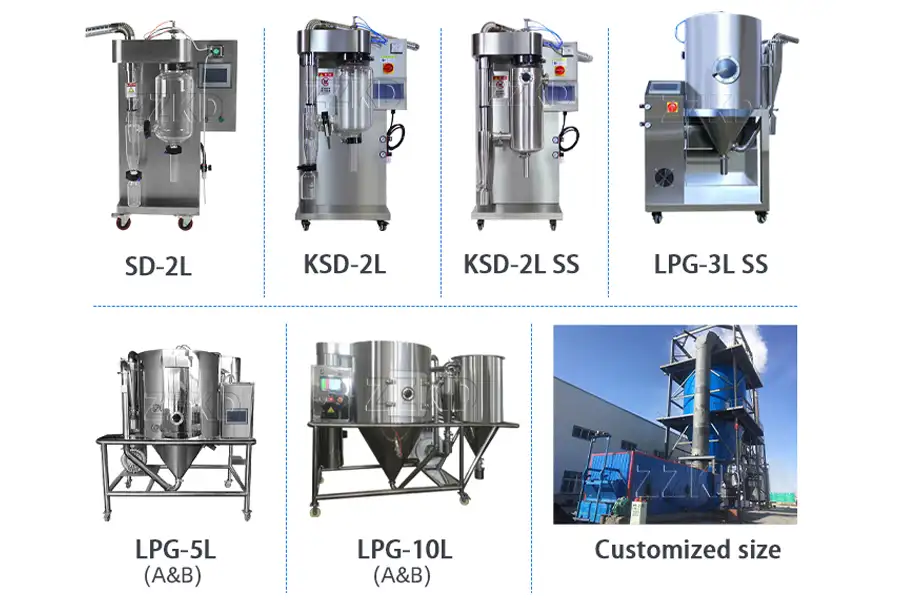
- Scalability from laboratory to industrial production.
- Ability to handle heat-sensitive materials with proper temperature control.
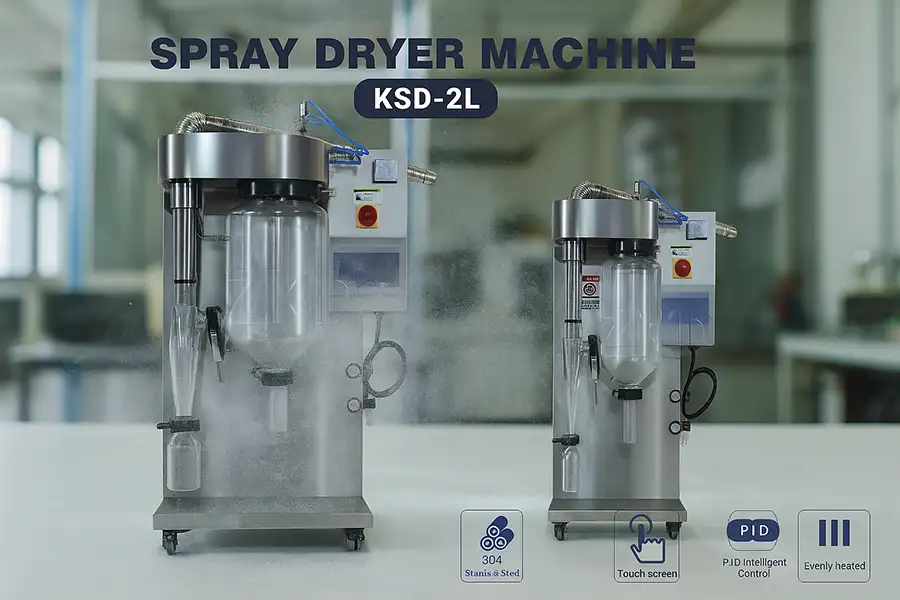
Modern spray drying equipment, such as the spray dryer machine, integrates automation and temperature monitoring to ensure consistency and efficiency.
Challenges and Optimization
While spray drying is highly efficient, it requires precise control of parameters such as air temperature, droplet size, and feed concentration. Improper settings can lead to uneven drying or product degradation. Advanced machines now include real-time feedback systems and AI-based optimization, which, according to a study by the Technical University of Munich, can improve yield by up to 25%.
Comparing Spray Drying with Other Technologies
Spray drying is often compared with freeze drying and vacuum drying. Each method has its strengths, but spray drying stands out for its cost-effectiveness and speed. For laboratory-scale operations, a compact laboratory spray dryer offers flexibility and precision for research and small batch production.
Conclusion
Spray drying is a transformative process that bridges science and industry. It converts liquids into powders efficiently, preserving product quality and extending shelf life. From milk powder and pharmaceuticals to chemical catalysts, the technology continues to evolve with innovations in automation and sustainability.
For more insights into drying technologies and comparisons, explore related articles on ZZKD Instrument’s Spray Dryer Guide.