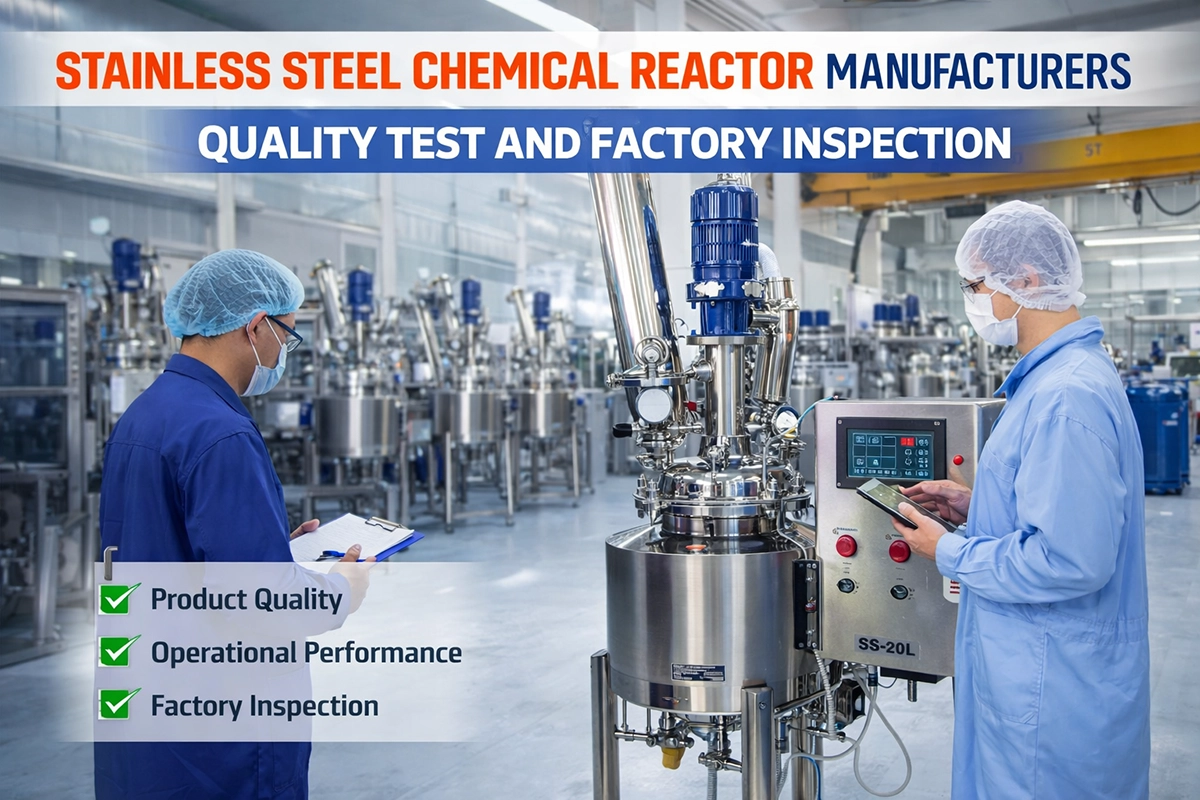




What Certifications and Test Reports Must Be Checked When Choosing Stainless Steel Chemical Reactor Manufacturers?
Choosing among stainless steel chemical reactor manufacturers is not only about price, delivery time, or appearance. The real difference often lies in paperwork: certifications, inspection records, pressure test reports, and material traceability documents. These are the files that help confirm whether a reactor is safe, durable, and truly suitable for chemical production, pilot testing, or laboratory use.
Why Certifications and Test Reports Matter So Much
In chemical processing, a reactor is not just a container. It may operate under heat, vacuum, pressure, stirring load, and corrosive media at the same time. If the manufacturer cannot provide solid proof of quality, the equipment may look acceptable at first but fail during long-term operation.
According to the U.S. Occupational Safety and Health Administration (OSHA), improper equipment design, maintenance, and process safety control are major contributors to serious industrial accidents. In addition, the American Society of Mechanical Engineers (ASME) has long emphasized that pressure-containing equipment must be designed, fabricated, and tested according to recognized standards to reduce failure risk.
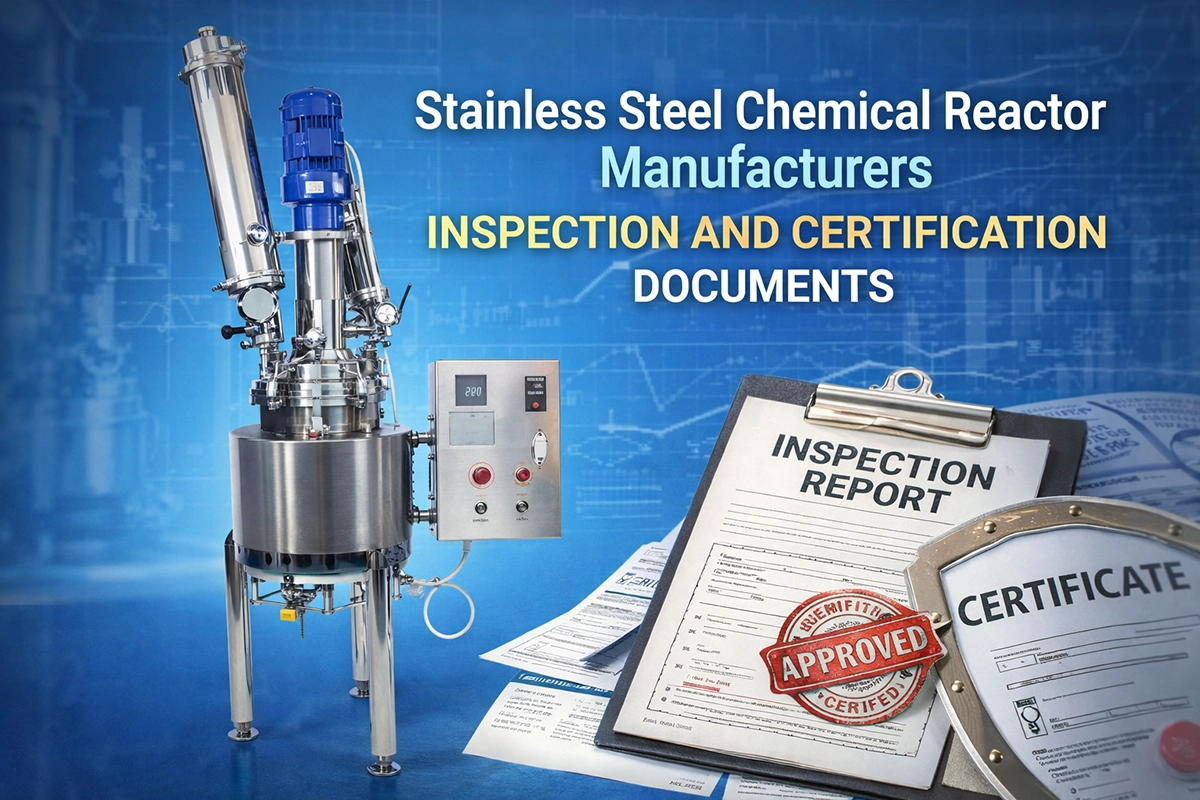
The First Certification to Check: Quality Management System
The most basic document to request is the manufacturer’s quality management certification, usually ISO 9001. This does not mean every reactor is automatically perfect, but it does indicate that the factory has a structured system for purchasing, production, inspection, and corrective actions.
If a supplier cannot provide ISO 9001 or an equivalent quality management document, that is already a warning sign. A serious manufacturer should be able to show not only the certificate but also matching internal inspection procedures.
Is ISO 9001 alone enough to prove reactor quality?
No. From a practical buying perspective, ISO 9001 is only the starting point. It shows management discipline, but it does not replace material reports, weld inspection, pressure tests, or sealing checks for the actual reactor.
For buyers comparing technical options, it can also help to understand the broader role of reactors in industry. A related overview is available here: the role of stainless steel chemical reactors in modern industry.
Material Certificates Are Absolutely Essential
For stainless steel reactors, material proof is one of the most important things to verify. Many buyers ask for 304 or 316 stainless steel, but the key question is this: can the manufacturer prove the material grade with traceable documentation?
The most useful document is a material certificate, sometimes called a mill test certificate or material test report. This should show the steel grade, chemical composition, and in many cases the heat number or batch number.
That matters because different applications need different corrosion resistance. For example, the provided SS-5L data shows a reactor material of 316 stainless steel, while its frame and pipe material are 304 stainless steel. That is a reasonable structure for many laboratory and pilot uses, because the wetted reactor body often needs stronger corrosion resistance than the external support frame.
- SS-5L reactor body: 316 stainless steel
- SS-5L frame and pipe: 304 stainless steel
- SS-20L model variation: 304 stainless steel in the listed configuration
- SS-10L to SS-300L series: SUS316/SUS304 optional depending on specification
If the process involves solvents, corrosive feedstocks, or stricter cleanliness requirements, 316 is often preferred. Buyers who want more background on that material choice can also review: SS 316 reactor price factors, variations, and considerations.
Pressure, Vacuum, and Leak Test Reports Must Match the Real Working Range
This is one of the most overlooked checks. Many suppliers say a reactor can run under pressure or vacuum, but buyers should ask for actual test records.
For example, the provided specifications show:
- SS-5L vacuum degree: -0.098 MPa to 0.5 MPa
- SS-10L to SS-300L series work pressure: -0.1 MPa to 0.5 MPa
- Temperature range: as low as -100°C and up to 250°C or 299°C depending on model
These figures are meaningful only if they are backed by pressure testing, vacuum holding tests, and sealing inspection records. A trustworthy manufacturer should be able to provide:
- Hydrostatic or pneumatic pressure test report
- Vacuum retention or leak test report
- Seal inspection record for the mechanical seal or PTFE sealing system
- Temperature sensor calibration or functional test for PT100 digital display systems
If a catalog already lists pressure and vacuum values, is that enough?
Not really. Catalog values are design claims. A test report is proof that the finished unit, or at least the same production standard, has passed verification. For safety-critical equipment, proof always matters more than advertising text.
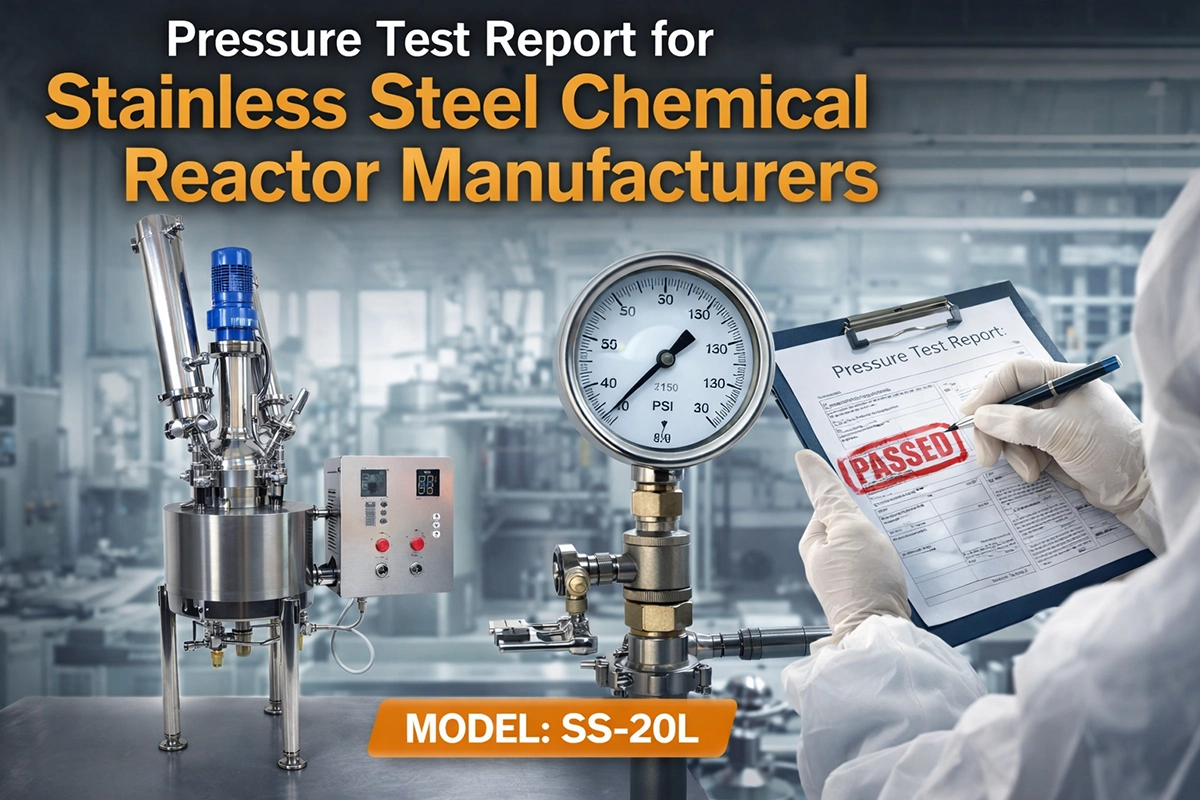
Welding and Surface Inspection Records Should Not Be Ignored
In a stainless steel reactor, poor welding can create weak points, contamination risks, dead corners, or leakage around nozzles and ports. That is why weld quality records matter, especially for jacketed vessels, double-wall structures, and reactors with multiple lid openings.
The supplied reactor series mentions features such as multiple ports, threaded union connections, mechanical seals, paddle stirrers, and double-wall stainless steel construction. These details increase functionality, but they also increase the number of welds, joints, and sealing points that need inspection.
Useful documents may include:
- Welding procedure qualification records
- Welder qualification records
- Visual weld inspection records
- Polishing or surface finish confirmation, when cleanliness is important
If a process is sensitive to residue buildup or easy cleaning, asking about internal finish quality is very important. Smooth surfaces can improve cleanability and reduce contamination risk.
Electrical and Safety Compliance Certificates Are Also Important
If the reactor includes motors, heating systems, digital displays, frequency converters, or control panels, electrical compliance matters too. The provided specifications include digital frequency conversion speed regulation, digital temperature display, circulation heating, and power configurations such as 220V/60Hz or 220V/50Hz.
For export projects, buyers should ask whether the electrical part has relevant compliance documents such as CE, or other region-specific approvals where required. If the process area has flammable solvents, explosion-proof requirements may also apply, and this must be confirmed clearly before production.
What if the reactor itself is strong, but the control system lacks proper compliance?
Then the overall system may still become a risk. In real operation, motors, heating, sensors, and speed control are not optional extras. They are part of the equipment’s safety and usability.
For buyers comparing stainless steel and other reactor types, another useful reference is stainless steel jacketed reactor solutions.
A Quick Checklist of the Documents Worth Requesting
| Document | Why It Matters | What to Check |
|---|---|---|
| ISO 9001 certificate | Shows factory quality management system | Validity, issuing body, factory name match |
| Material certificate | Confirms 304 or 316 stainless steel grade | Composition, batch number, traceability |
| Pressure test report | Verifies vessel strength | Test pressure, date, model reference |
| Vacuum / leak test report | Confirms sealing performance | Vacuum level, holding time, leak result |
| Weld inspection record | Reduces structural and leakage risk | Critical joints, acceptance result |
| Electrical compliance file | Supports safe use of motors and controls | Voltage, certification scope, panel details |
| Factory inspection record | Shows final pre-shipment checks | Speed, temperature display, discharge valve, seal |
Final Thought: The Best Manufacturer Is the One That Can Prove What It Claims
When evaluating stainless steel chemical reactor manufacturers, the most useful approach is very practical: ask for documents that directly answer the real risks. Is the stainless steel grade authentic? Has the vessel passed pressure and vacuum testing? Are the welds controlled? Are the seals and controls checked before shipment?
A good manufacturer should not hesitate to provide these records. In fact, clear documentation usually means the factory understands industrial responsibility and long-term customer value.
If only one simple rule needs to be remembered, it is this: do not buy a reactor based only on the parameter sheet—buy based on the parameter sheet plus verifiable proof.