When process safety, product purity and uptime matter, an ASME certification stainless steel reactor is more than a label on a nameplate. It is a structured way to control risk, meet regulations, and keep production running smoothly. This guide walks through the essentials, using real reactor parameters from 5 L to 300 L as concrete examples.
In chemical, pharmaceutical, food and new-material plants, stainless steel reactors are pressure vessels that must work safely for years under heating, cooling, vacuum and sometimes positive pressure. That is exactly why ASME certification has become a common requirement in many regions and industries.
1. What Is an ASME-Certified Stainless Steel Reactor?
An ASME-certified stainless steel reactor is a pressure vessel that is designed, fabricated, inspected and tested according to the ASME Boiler and Pressure Vessel Code (BPVC), usually Section VIII for process vessels. The manufacturer is audited by ASME or an authorized inspection agency and the vessel carries an official ASME stamp (often a “U” stamp).
In practical terms, this means:
-
The reactor has verified design calculations for wall thickness, nozzle reinforcement and allowable working pressure.
-
Welding procedures, welders and NDT (e.g. X-ray, ultrasonic) are qualified and documented.
-
Material certificates for 304/316 stainless steel, gaskets and other pressure-retaining parts are traceable.
-
The final vessel has passed pressure tests (usually hydrostatic) above its design pressure.
Why this matters: According to a global survey by a leading process safety institute, over 60% of major loss events in pressure systems involved design or fabrication issues that could have been mitigated by stricter standards. ASME certification directly targets that risk.
For a plant engineer or quality manager, ASME certification does not automatically solve every problem, but it gives a reliable baseline: the vessel is not the weak link as long as it is operated within its design envelope.
Is an ASME certification stainless steel reactor always legally required?It depends on local regulations and working conditions. In many countries or states, pressure vessels above a certain volume and pressure must comply with ASME or equivalent codes. Even when not strictly mandated, buyers often specify ASME to simplify insurance, international audits, and future plant expansions.
2. Why Stainless Steel (304 & 316) Is the Default Choice
Stainless steel reactors combine mechanical strength, corrosion resistance and cleanability. The most common grades are:
-
SS304 – cost-effective, good for many neutral or mildly corrosive media, widely used for frames, pipes and non-critical wetted parts.
-
SS316 / 316L – contains molybdenum; better resistance to chlorides, acids and aggressive process conditions; preferred for reactor bodies in fine chemicals and pharma.
For example, the 5 L process reactor below uses a 316 stainless steel kettle body with a 304 stainless steel frame and stirrer:
|
Model SS-5L – Compact 316 Stainless Steel Reactor |
|
|
Reactor volume |
5 L (working) |
|
Reactor material |
316 stainless steel |
|
Frame / pipe material |
304 stainless steel |
|
Jacket (mezzanine) volume |
≈1.5 L |
|
Temperature range |
-100 ℃ to 250 ℃ |
|
Working pressure range |
Vacuum -0.098 MPa to 0.5 MPa |
|
Stirring speed |
0–600 rpm (frequency control) |
|
Seal / discharge |
Mechanical seal; ball quick-discharge valve |
|
Control / display |
Digital speed display, PT100 digital temperature display |
This type of small reactor is often used for process development under vacuum or mild pressure. When such a unit is scaled up to pilot or production scale, ASME certification becomes increasingly relevant because stored energy and risk grow significantly with volume and pressure.
3. Typical Operating Envelope of ASME Stainless Steel Reactors
Many modern jacketed stainless steel reactors share similar performance envelopes, even across different volumes:
-
Temperature: roughly -100 ℃ to 250–299 ℃ (depending on lining, insulation and jacket fluid).
-
Pressure: often specified as from full vacuum (~-0.1 MPa) up to 0.5 MPa or higher for pressure-rated designs.
-
Agitation: 0–600 rpm with digital frequency control; power increases with volume (e.g. 120 W–400 W+).
-
Construction: double-wall (jacketed) stainless steel bodies; ceramic or PTFE-enhanced mechanical seals.
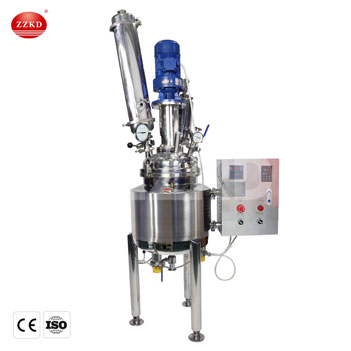
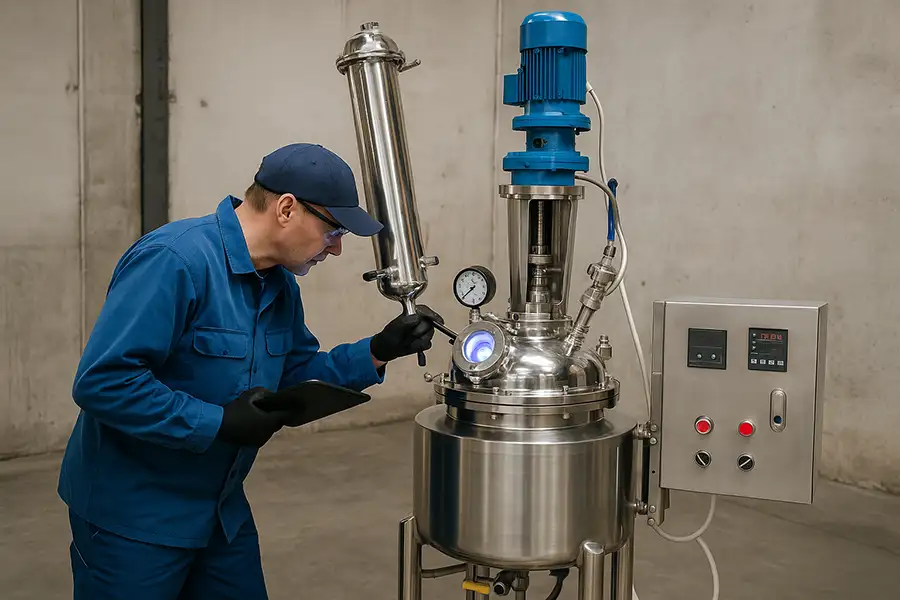 Jacketed ASME stainless steel reactors: double-wall design with integrated heating/cooling circuits.
A series of stainless steel reactors from 10 L to 300 L shows how parameters scale:
|
Model |
Kettle Volume |
Jacket Volume (approx.) |
Temperature Range |
Stirring Speed |
Power |
Material |
Working Pressure |
|
SS-10L |
10 L |
≈3.8 L |
-100 ℃ ~ 299 ℃ |
0–600 rpm |
120 W (1/3 HP) |
SUS304 / SUS316 |
-0.1 MPa ~ 0.5 MPa |
|
SS-20L |
20 L |
≈5 L |
-100 ℃ ~ 299 ℃ |
0–600 rpm |
200 W (1/3 HP) |
SUS304 / SUS316 |
-0.1 MPa ~ 0.5 MPa |
|
SS-50L |
50 L |
≈15 L |
-100 ℃ ~ 299 ℃ |
0–600 rpm |
400 W (1/3 HP) |
SUS304 / SUS316 |
-0.1 MPa ~ 0.5 MPa |
|
SS-100L |
100 L |
≈20 L |
-100 ℃ ~ 299 ℃ |
0–600 rpm |
400 W (1/3 HP) |
SUS304 / SUS316 |
-0.1 MPa ~ 0.5 MPa |
← Swipe Left and Right to View the Table→
From an ASME perspective, each of these volumes may fall into different regulatory categories depending on your jurisdiction. Larger volumes and higher working pressures almost always require formal pressure vessel registration and inspection.
4. Key Design Features to Look For in an ASME Stainless Steel Reactor
When evaluating an ASME certification stainless steel reactor, a few practical design details often make the difference between a smooth installation and ongoing headaches.
4.1 Ports and Connections
A well-designed reactor head (lid) offers multiple functional ports, for example:
-
Agitator port with mechanical seal
-
Solid charging port
-
Temperature measurement port (often PT100)
-
Pressure gauge port (with sanitary chuck connection)
-
Constant-pressure funnel port for controlled addition
-
Condensation reflux port for distillation and return
The SS-10L to SS-300L series typically offers 8 ports on the vessel top, and uses threaded unions or sanitary clamps for easy maintenance and reconfiguration.
4.2 Sealing and Mixing
ASME-certified reactors still need carefully chosen sealing and mixing systems to avoid leaks and contamination:
-
Mechanical seals: SUS304 ceramic combined mechanical seals or PTFE-based mechanical seals are common. They provide good sealing under vacuum and low positive pressure.
-
Agitator type: paddle or three-blade impellers in 304 stainless steel are typical, optimized for liquid–liquid or liquid–solid mixing.
-
Drive: frequency-converter-based motors, with digital speed display, make it easier to scale mixing from lab to pilot plant by matching tip speed or power per volume.
What happens if a mechanical seal is undersized or not suited to the pressure range?Seal failure can lead to product loss, contamination, or in worst cases, hazardous leakage. In a pressure-rated reactor, this can also reduce the effective pressure envelope. That is why the seal must be specified together with the ASME design, not as an afterthought.
4.3 Heating and Cooling
Most ASME stainless steel reactors use a jacket (mezzanine) for temperature control:
-
Circulation heating – hot oil, steam or electric-heated circulating fluid runs in the jacket.
-
Cooling – chilled water or brine can be used for exothermic reactions or crystallization.
For example, a 20 L stainless steel reactor (SS-20L) might be specified as:
|
Model SS-20L |
|
|
Effective capacity |
20 L |
|
Material |
304 stainless steel |
|
Power supply |
220 V / 50 Hz single-phase |
|
Stirring power |
550 W |
|
Speed / frequency |
0–100 rpm (frequency control) |
|
Heating power |
6 kW |
|
Material thickness |
3 mm |
In an ASME context, that 3 mm thickness, combined with material grade, diameter and design pressure, must be backed by calculations and verified by inspection.
5. When ASME Certification Becomes Especially Important
Not every small reactor is ASME stamped. However, certain scenarios make ASME certification highly advisable or effectively mandatory:
-
High pressure: reactors designed to operate above 0.5 MPa or with high vacuum/pressure cycles.
-
Hazardous contents: flammable, toxic or environmentally sensitive chemicals, where leaks have serious consequences.
-
Pharmaceutical and GMP facilities: external audits, quality-by-design and validation requirements often reference recognized pressure vessel codes.
-
Export projects: when reactors are shipped across borders, ASME certification simplifies customs, insurance and acceptance by local authorities.
Risk insight: Studies by major industrial insurers show that pressure equipment failures, though relatively infrequent, account for a disproportionately high share of property damage costs per incident. Using ASME-certified reactors is one of the most cost-effective ways to reduce that tail risk.
6. How to Select the Right ASME Stainless Steel Reactor
From my experience helping users specify reactors, a structured checklist helps avoid oversights. Below is a condensed, practical framework:
6.1 Define the Process Envelope First
-
Capacity: working volume (e.g. 20 L, 50 L, 100 L). A reactor is usually filled to 70–80% of its nominal volume to leave headspace.
-
Temperature: minimum and maximum reaction temperature, and ramp rates (e.g. -20 ℃ to 200 ℃, heated at 2 ℃/min).
-
Pressure: vacuum level and maximum positive pressure. For example, -0.098 MPa vacuum and 0.5 MPa positive pressure.
-
Media: chemicals, solvents, solids; any chlorides or acids that influence material selection (304 vs 316/316L vs special alloys).
6.2 Translate That into Reactor Parameters
Once the process envelope is clear, parameters like the following can be matched, using real models (SS-5L to SS-300L) as a starting list:
-
Volume & jacket size: choose kettle and jacket volumes that can handle your heat load. Larger jackets (e.g. 95 L on a 300 L reactor) give more flexibility.
-
Material grade: 316 stainless steel for the wetted reactor body when dealing with chlorides or stronger acids; 304 stainless steel is often sufficient for neutral or mildly corrosive media and structural parts.
-
Agitator & power: heavier slurries or high-viscosity media require more power than clear liquids.
-
Port configuration: enough openings for sampling, dosing, pressure gauges, condensers, etc.
How to decide between a 50 L and 100 L ASME-certified stainless steel reactor?Capacity alone is not the only factor. Consider batch size, safety headroom, heat transfer needs and future scale-up. If typical batches are 30–40 L and there is an expansion plan, a 100 L reactor running at 40–60% fill may offer more flexibility than a 50 L reactor pushed to its limits.
6.3 Budgeting and Reactor Pricing Factors
Reactor price is influenced by more than just volume. Based on industry data and internal project comparisons, the major cost drivers typically include:
-
Material (304 vs 316 vs Hastelloy or duplex stainless).
-
Design pressure and temperature (higher ratings mean more wall thickness, stronger flanges, more NDT).
-
Surface finish and polishing (pharma-grade internal Ra values cost more than industrial finishes).
-
Level of automation (basic local controls vs PLC/SCADA integration).
-
Certification package (ASME stamp, PED, local registrations).
A dedicated cost-focused overview of 316 reactors can be found in: SS 316 reactor price factors, variations and considerations , which breaks down how each of these choices affects your total budget.
7. Integration with Related Equipment
In most real plants, an ASME stainless steel reactor is part of a complete processing line that may include:
-
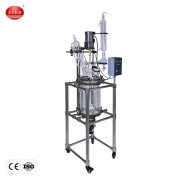
Glass or stainless steel pre-reactors for lab and pilot work.
-
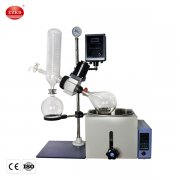
Rotary evaporators or rotovaps for solvent recovery and concentration.
-
Drying systems (e.g. spray dryers, vacuum ovens, freeze dryers) for final product handling.
-
Solvent recovery and recycling systems to reduce solvent purchase and waste treatment costs.
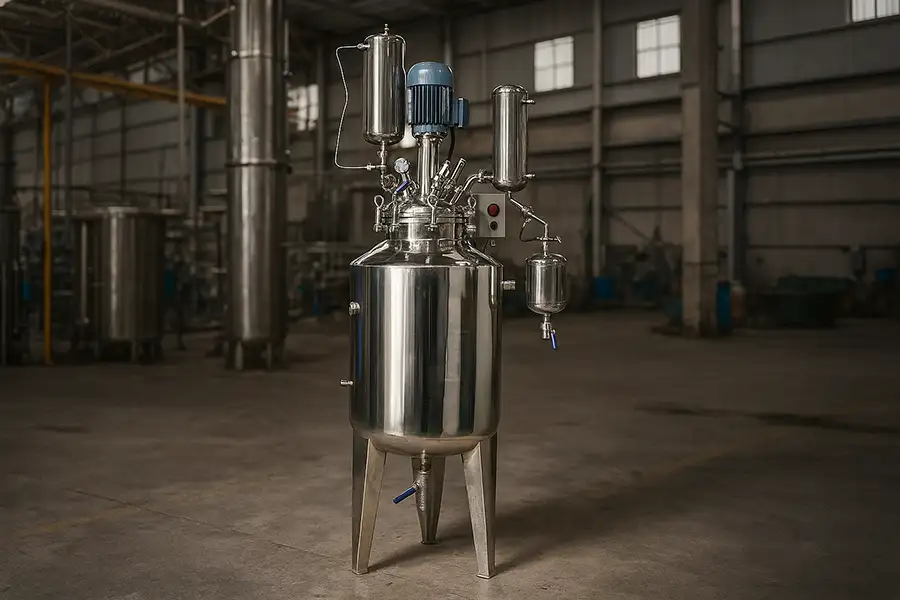 Integrated line: ASME stainless steel reactor with condenser, vacuum system, and downstream solvent recovery.
A well-specified ASME-certified reactor simplifies the rest of the engineering because utilities, interlocks and safety margins are clear and standardized.
8. What Documentation Should Come with an ASME-Certified Reactor?
For auditability and long-term reliability, proper documentation is as important as the steel itself. A robust documentation package typically includes:
-
ASME stamp and nameplate data (design pressure, temperature, volume, serial number).
-
Design calculations and drawings (GA and detailed).
-
Material certificates (MTCs) for shell, heads, nozzles, flanges.
-
Welding procedure specifications (WPS), procedure qualification records (PQR) and welder qualifications.
-
NDT reports (radiography, ultrasonic testing, dye penetrant where applicable).
-
Hydrostatic test certificates and pressure test records.
-
Operating and maintenance manuals, including recommended seals and gasket replacements.
If a reactor is advertised as “built to ASME” but has no stamp or documentation, is that enough?Usually not. “Built to ASME” can mean the vendor followed parts of the code but did not undergo full authorized inspection and stamping. For strict compliance and easier insurance and regulatory acceptance, look for an actual ASME stamp and traceable documentation.
9. Summary: Turning Specifications into Safe, Reliable Operation
An ASME certification stainless steel reactor combines three pillars:
-
Robust design: verified by code calculations.
-
Reliable materials and fabrication: 304/316 stainless steel, qualified welders and NDT.
-
Traceable documentation: ASME stamp, test records and manuals for future audits.
Whether choosing a compact 5 L 316 stainless steel reactor for R&D or a 100 L–300 L production unit with 0.5 MPa pressure rating, the same logic applies: clearly define the process envelope, match it to material and mechanical design, and insist on certification when risk and regulations demand it.
For a deeper dive into the broader role of stainless steel chemical reactors across industries, including comparisons with glass and special alloys, you can also refer to: The role of stainless steel chemical reactors in modern industry .
Updated for current ASME BPVC practices and typical 304/316 reactor configurations. Designed for engineers, buyers and quality managers exploring safe, scalable reactor solutions.


 Products